

Climate change has stopped being a future threat and has become an everyday reality in farmland. Today, climate volatility shows up as drastic temperature fluctuations and severe water imbalances, ranging from prolonged droughts to moisture saturation caused by torrential rains. For farmers, these abiotic stress factors represent the main obstacle preventing plants from reaching their maximum genetic potential, which puts the profitability of the entire season at direct risk.
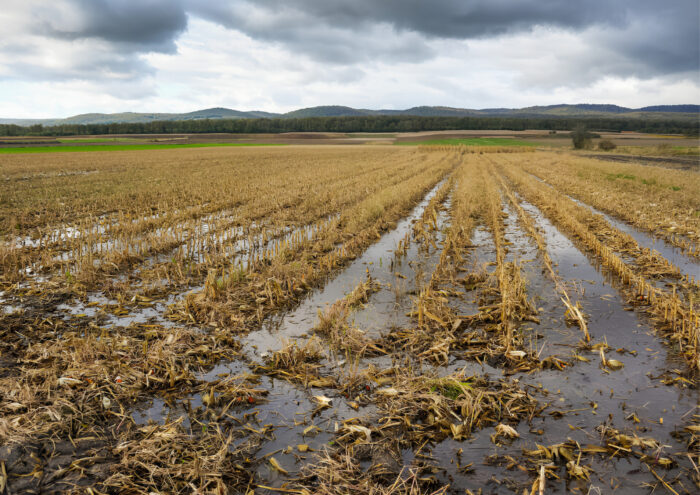
Damage to Crops: What Happens to the Soil and the Plant?
To recover a damaged crop, we must first understand what is happening within the plant’s system. The damage is divided into two fronts: soil and plant.
Impact on the Soil
When the soil becomes saturated, in this case with water, the air is displaced. This causes hypoxia (low oxygen concentration) or anoxia (total absence of oxygen).
- Loss of structure: The pounding of water and runoff compact the soil and destroy aggregates, creating a surface crust that, when it dries, prevents future aeration.
- Nutrient leaching: Mobile elements such as nitrogen (in the form of nitrates), potassium, and sulfur are “washed” into deeper layers, leaving the crop in a state of starvation.
- Alteration of the microbiota: Beneficial aerobic microorganisms die, giving way to anaerobic bacteria that can produce substances such as hydrogen sulfide, which is a signaling molecule in small doses but becomes toxic to the plant under excessive conditions.
Impact on the Plant
- Halted transport: The plant closes its stomata to avoid water loss (even though it is surrounded by water), stopping photosynthesis.
- Ethylene production: Water stress from flooding triggers ethylene synthesis, which causes the shedding of leaves (defoliation), flowers, and fruit.
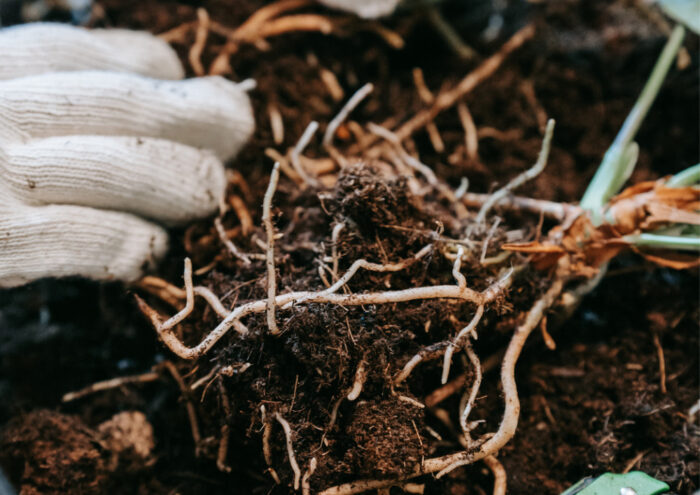
- Root death: The finest roots, which are responsible for absorption, are the first to rot, opening the door to pathogens such as Phytophthora or Pythium.
Soil Recovery Strategies
Soil recovery must be approached from three dimensions: physical, chemical, and biological. A plant cannot be nourished if the medium in which it lives has lost its retention capacity, porosity, and structure in general.
-
Physical Restoration and Aeration
The goal is to eliminate the compaction and “sealing” that suffocates the roots:
- Sediment removal: Mechanically remove or break up the deposited mud as soon as the soil has adequate moisture (field capacity) to allow oxygen to enter.
- Decompaction: Avoid heavy machinery on saturated soils. Once drained, use subsoilers or minimum tillage to fracture hardened layers and facilitate deep drainage.
-
Chemical Stabilization
This seeks to eliminate phytotoxins and balance the pH altered by the lack of oxygen:
- Salt leaching: As soon as the soil moisture stabilizes, carry out controlled irrigation with good-quality water to displace excess salts, iron, and manganese.
- Calcium amendments: Apply agricultural gypsum (calcium sulfate) to correct temporary acidity and improve structure.
-
Biological Reactivation
It is vital to replenish the aerobic microorganisms eliminated by the flooding:
- Beneficial inoculation: Apply consortia of Bacillus, Trichoderma, and PGPR to break down dead roots and prevent pathogens.
- Humic and fulvic acids: Use them to rebuild soil aggregates and protect new roots during the stabilization of the land.
To learn more about our fulvic and humic acids, please visit: https://www.mycsainc.com/en/products
-
Drainage Management
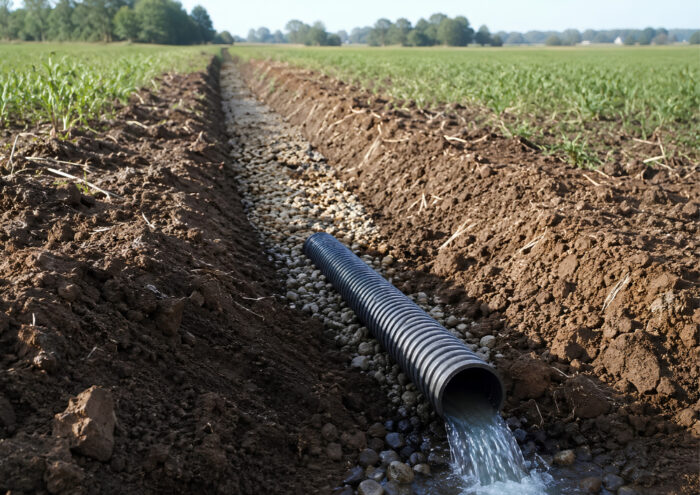
- Infrastructure optimization: Clean channels and, if necessary, install internal drains (perforated pipe) in low-lying areas. Efficient drainage doubles the speed of recovery.
The Role of Biostimulants in Your Damaged Crops
This is where organic technology makes the difference. After a flood, the plant has no energy for complex metabolic processes.
Seaweed Extract (Ascophyllum nodosum)
Seaweed is rich in natural hormones (cytokinins, auxins, and gibberellins) and betaines.
- Anti-stress effect: They help the plant maintain osmotic balance and gradually reopen the stomata.
- Root reactivation: The hormones present stimulate the creation of new absorbent root hairs to replace those lost to anoxia.
- Antioxidants: They help neutralize the reactive oxygen species (ROS) that accumulate in the cells due to stress.
Amino Acid Compound
Applying amino acids is like giving the crop a direct “transfusion” of energy.
- Energy savings: Normally, the plant spends a lot of energy converting nitrogen into amino acids. After the flood, its synthesis capacity is almost nil. When applied foliarly or through the roots, the plant uses them immediately to repair tissues.
- Chelating action: Amino acids facilitate the absorption of the few microelements that remain in the soil, helping to restore photosynthesis and stimulate chlorophyll formation faster.
To learn more about our growth regulators, please visit: https://www.mycsainc.com/en/products

Critical Points for the Farmer
Phytopathological management: Excess moisture is a paradise for fungi. It is imperative to carry out preventive applications of biological fungicides such as Trichoderma spp. once the level of moisture in the soil stabilizes.
Foliar fertilization: Since the roots are damaged, the foliar route is an efficient alternative for nourishing the plant in the first week after flooding. Prioritize phosphorus in the soil (for energy and roots) and potassium (for water regulation).
No immediate pruning: Even if you see yellow leaves, avoid drastic pruning right away. Wait to see where the plant sprouts again in order to assess which tissue is truly dead.
In conclusion, the recovery of a flooded crop is a race against time. Combining physical soil management (drainage and aeration) with a strategic biostimulation program based on seaweed and amino acids can reduce losses by up to 60%. The key is to act as soon as the soil allows access, treating the plant not as a healthy organism, but as a patient in intensive care that requires direct metabolic support.

Agriculture can be both more productive and more sustainable. Visit our website and get to know our range of products; discover which one best fits your needs: https://www.mycsainc.com/en
Frequently Asked Questions
- What are the symptoms of excess water in plants?
The most common are yellow leaves, shedding of leaves, flowers, and fruit, wilting even though the soil is moist, and dark, soft, or foul-smelling roots. This occurs because the root runs out of oxygen and stops absorbing water and nutrients.
- Why does excess water damage roots?
When the soil becomes saturated, water displaces the air and causes hypoxia (low oxygen) or anoxia (total absence of oxygen). The fine roots, which are the ones that absorb, are the first to rot, and that opens the door to pathogens such as Phytophthora and Pythium.
- How can a plant with excess water be recovered?
You have to act on several fronts: improve soil drainage and aeration, leach out excess salts once the soil stabilizes, reactivate microbial life with beneficial inoculants, and support the plant with biostimulants. Heavy machinery should be avoided while the soil is still saturated.
- Which biostimulants help recover plants with excess water?
Seaweed extracts help reactivate the root and reduce stress. Amino acids provide direct energy to repair tissues. And humic and fulvic acids help rebuild soil structure and protect new roots.
- Should a plant affected by excess water be pruned?
Not immediately. Even if the leaves look yellow, it is best to wait and see where the plant sprouts again to know which tissue is truly dead.
- Can a plant with excess water be fertilized?
Yes, but carefully. Since the roots are damaged, foliar fertilization during the first week is a more efficient route. Priority is recommended for phosphorus (energy and roots) and potassium (water regulation).